. . . learning and teaching about the natural world to better preserve and protect it.
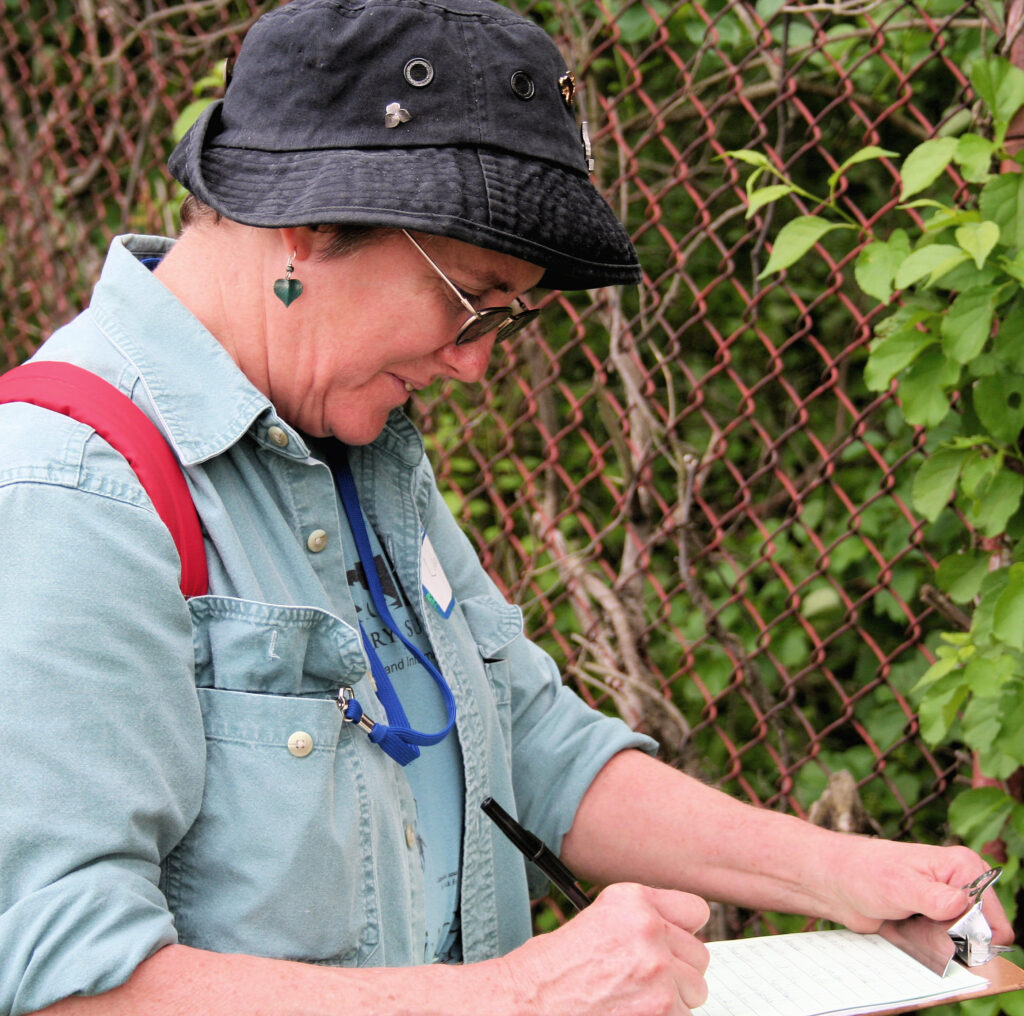
For many Rhode Islanders, Lisa Lofland Gould’s name is synonymous with plant ecology, plant identification, invasive plant preparedness, and natural history field trips. Lisa is a well-known speaker on native plants, led programs or taught classes on such topics as ecosystems and invasive species ecology, and is the author, coauthor, or editor of more than two dozen books and articles.
With a B.A. in Biology from the University of North Carolina, Greensboro, Lisa Gould came to Rhode Island in 1969 to study for her M.S. in zoology at the University of Rhode Island, which she received in 1972. For some time after that, she did biological inventory projects as a private environmental consultant for the National Oceanic and Atmospheric Administration (NOAA), URI, and other parties. She gradually developed an expertise in Rhode Island plants, as well as an interest in environmental education and she became one of Rhode Island’s most widely sought speakers on native plants. She led programs or taught classes for URI (including the Master Gardener Program and Watershed Watch), the RI Wild Plant Society, New England Wild Flower Society, The Nature Conservancy, The Audubon Society of Rhode Island, and others. She has served on the steering committee of the New England Invasive Plant Group (NIPGRO) and as a field volunteer for the Invasive Plant Atlas of New England (IPANE) and the New England Plant Conservation Program (NEPCoP). Gould created and then served as the Coordinator of the RI Invasive Species Council (RIISC), a joint project of RINHS and the Rhode Island Agricultural Experiment Station.
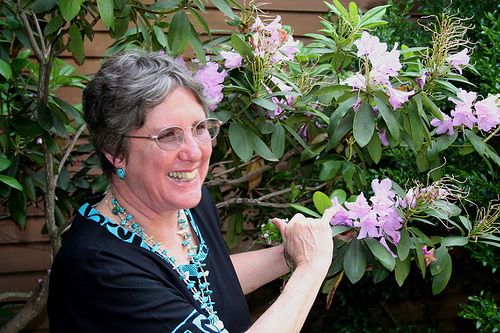
In 1987, Lisa participated in the founding of the Rhode Island Wild Plant Society and she served as the president of RIWPS from 1987 to 1989. From its beginning, the Wild Plant Society reflected Lisa’s interest in conserving the state’s plant diversity in native habitats. In addition to an array of educational programs, the Wild Plant Society under Lisa’s leadership succeeded in getting sea lavender protected from picking under the so-called “Christmas Greens” law. Lisa also oversaw the introduction of the now much anticipated Native Plant Sales, proceeds of which have underwritten elementary school programs and many other educational endeavors. The Wild Plant Society has from its inception cooperated with other local and regional conservation organizations, conducted plant inventories that aid land management decisions, and provided consulting for restoring and enhancing properties through the use of native plants.
In 1994, Lisa Gould was one of a group of volunteer and professional naturalists who founded the Rhode Island Natural History Survey and Lisa Gould began serving as its first executive director in that year. As executive director of the Natural History Survey, Lisa initiated the Biota of Rhode Island publication series, now including volumes on vertebrates, beetles, and fungi, as well as vascular flora. In addition to her work on RINHS publications, Lisa Gould has a long catalogue of her own publications, being author, co-author, or editor of more than two dozen books and articles, including Coastal Plants from Cape Cod to Cape Canaveral (U. of NC Press, 2000) with Irene H. Stuckey. She helped create the annual “Ecology of Rhode Island” conference, the 13th edition of which we attend today. She brought the “BioBlitz” event to Rhode Island. This annual biodiversity field day, to be held for the 10th time this June 5th and 6th in Glocester, features over 100 volunteer naturalists documenting as many species animal and plant on a particular parcel of land as possible in 24 hours. Lisa was instrumental in making the Rhode Island Distinguished Naturalist Award the highly regarded recognition that it is, and now we are here today to award it to Lisa herself. Lisa stepped down as director of the Survey in 2004 to take the position of senior scientist. In that position Gould was primarily involved with advocating better research, education, coordination, and planning in Rhode Island and southern New England on the problem of invasive species. She also worked to build the Survey’s state-wide database of animals and plants, called BORIIS for “Biota of Rhode Island Information System.”
After 33 years in Rhode Island, Lisa returned to her native North Carolina in 2006, but her name – and her work –continues through the organizations she helped found, the people she taught and inspired, and an endowment created by her friends and colleagues and designated “for the support of education on the conservation of Rhode Island native plants.” The Lisa Lofland Gould Native Plant Program Fund pays for an annual event on native plants co-hosted by the Wild Plant Society, the Natural History Survey, and the University of Rhode Island.
Of course, Lisa Gould’s departure for North Carolina to be closer to her family has been a loss to Rhode Island, but she has shown us by her example how to do what needs to be done and has helped provide us with several strong institutions through which to carry on her work. We are fortunate to have her with us to day so we can recognize her for her contributions.