Date: June 5 & 6
Location: URI East Farm & Kington Wildlife Research Station, Kingston (and South Ferry Beach, Narragansett)
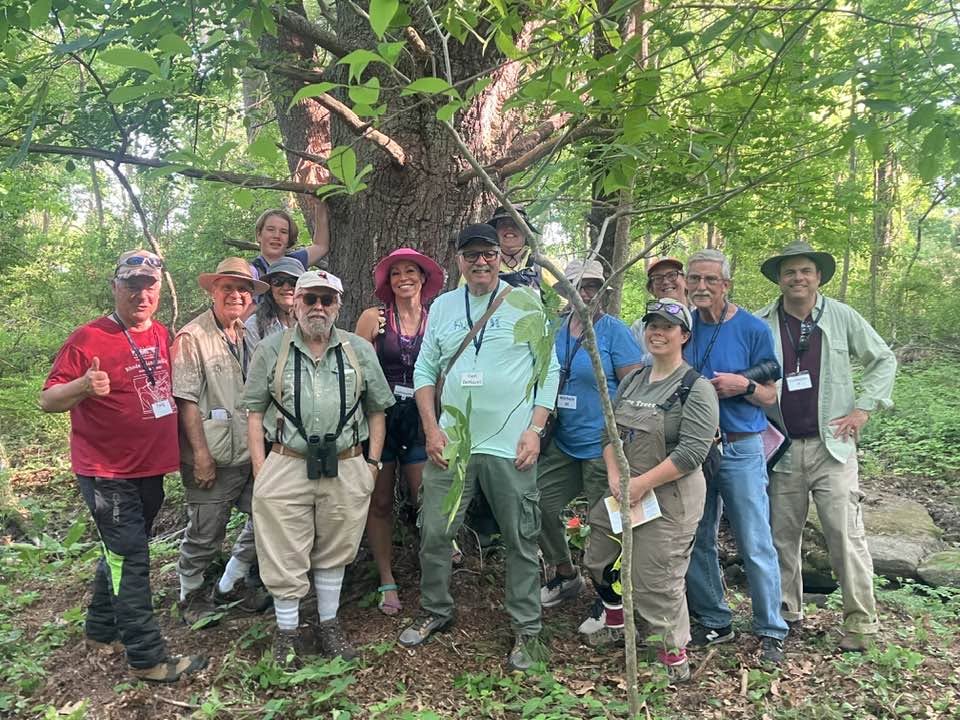
The 2026 RI BioBlitz was a home game for the Rhode Island Natural History Survey! We bioblitzed the 86 acres of URI’s East Farm campus, plus the abutting 84-acre Kingston Wildlife Research Station, and, to keep the marine teams engaged, we also bioblitzed the South Ferry beach at URI’s Narragansett Bay Campus.
The event was held in spectacular weather, with warm temperatures and refreshing breezes in the day and warm, humid, still air at night that brought out a lot of insects (and bats!). The weather was equaled in balminess by the spirits of the 295 people who attended. The preliminary count (pending final reports and more careful collation of disparate record sheets) is 1,095 species, a respectable number, though not near a record.
Significant finds included specimen trees, surprisingly unspoiled forested stream banks, rare plants, and ants not previously known from Rhode Island.
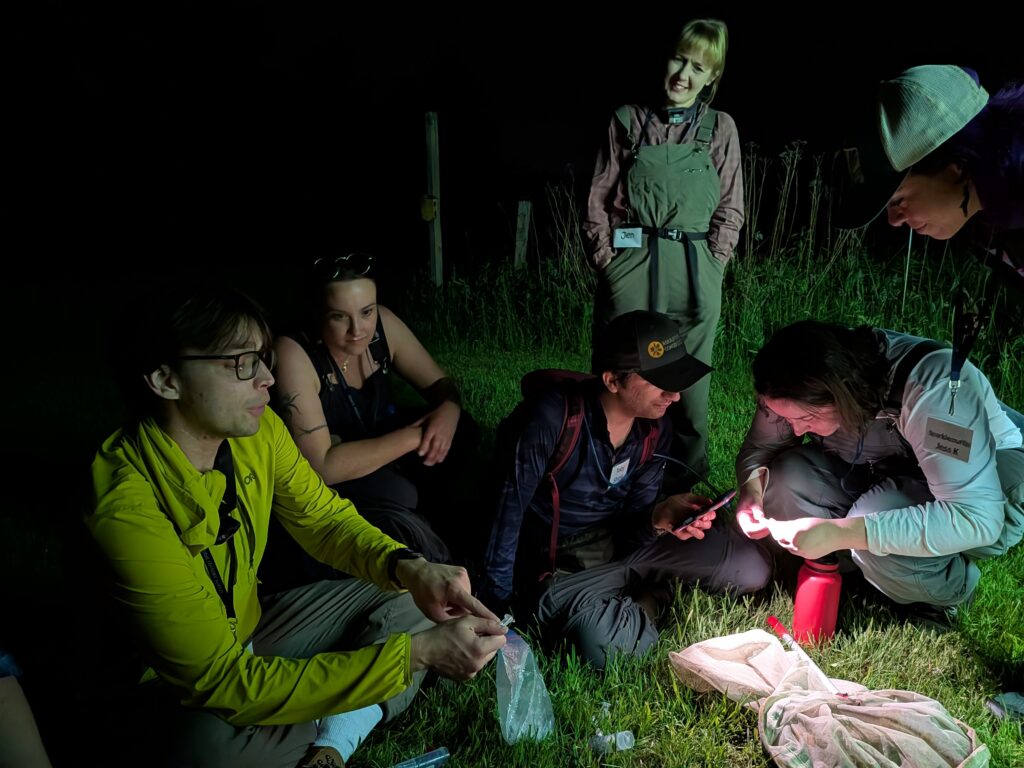
The Kingston Wildlife Research Station is owned by Audubon Society of Rhode Island and operated in cooperation with the University of Rhode Island’s Department of Natural Resources Science. It is one of the longest-running banding stations in the country. Both properties are former farm fields with older, second growth, wet woodlands. There are rough fields, orchards and ornamental horticulture plantings, small woodland pools, streams, and swamps. Invasives are a non-trivial component of the landscape but the disturbance history also provides a diversity of microhabitats.
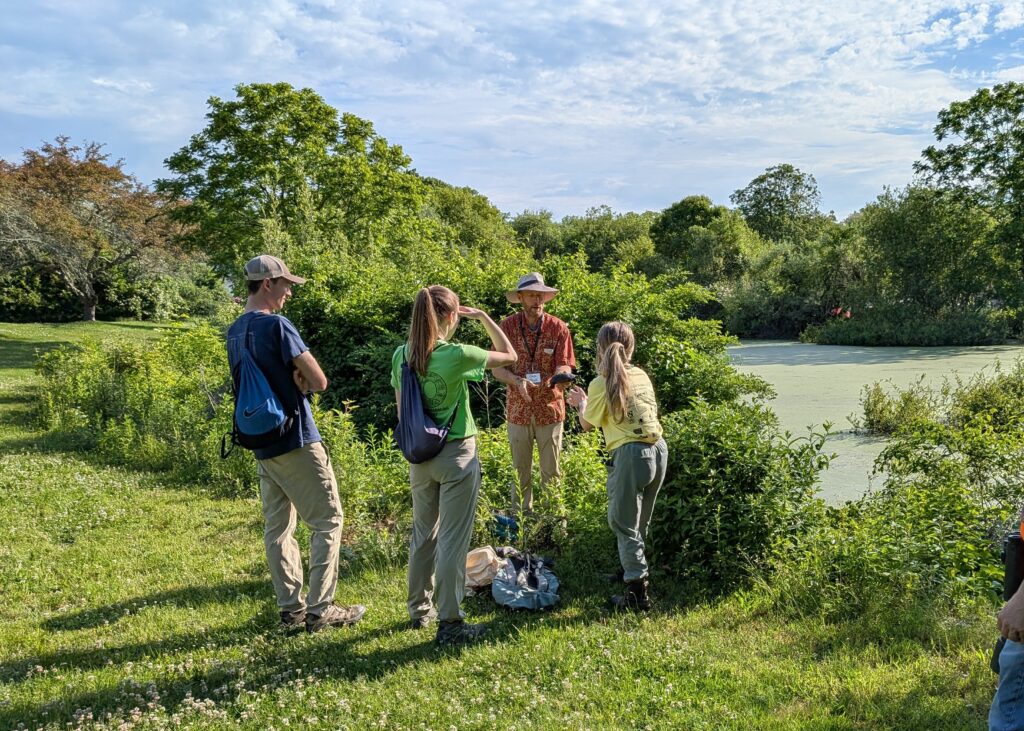
East Farm has been a site of agricultural research since the early 20th century when it was a center of blueberry and apple horticulture and chicken research.
We collected BioBlitz data in a variety of ways, including checklists, RIBORF paper forms, and via the iNaturalist project.